Kyza: The UK Rap Legend
When we talk about the birth of UK hip-hop, a name that always comes to mind is London Posse. Emerging in the early 90s with tracks like “Money Mad” and their seminal album, Gangster Chronicle, London Posse introduced and cemented the acceptability of English accents in rap and provided initial blueprints for future British MCs to build on. The rugged, introspective storytelling gave a poignant insight into working-class life. The genre continued to develop throughout 90s and by the turn of the century, the UK could claim a healthy stock of MCs with names like Derek B, Roots Manuva, Task Force, Skinnyman and Jehst making waves. Jump to the early noughties and a name that always comes up when discussing the GOATS of UK rap is Terra Firma: comprised of core members Klashnekoff, Kyza, Skriblah and Diamond Ruff. The anticipation for their debut album, 2006’s The Foundation, was phenomenal – but it was set to be the group’s only release. After years of performing together, one of the backbones of Terra Firma – and the subject of this interview – left that same year at arguably the peak of the group’s success. Kyza’s involvement in the UK scene has (at the time of writing) spanned over 20-years, starting with his decision to pursue a career in rap after hearing Jay-Z’s Reasonable Doubt in 1996 – “Things We Do For Love” was a personal favourite. The young rapper’s talent soon piqued the interest of Micall ‘Parky’ Parknsun, which led to the formation of NWC (North-West Collabo), Kyza’s first crew. It took until 1999 before any material of his was recorded and released. Soon after, his brother introduced him to Klashnekoff. The rest, as they say, is history.
“Back then it was from the source, innit,” Kyza declares when I ask him to paint a picture of the UK rap scene in the early 2000s. “Black kids from the hood just doing what they know. Nothing stripped away or watered down. It came from us. It was road but it wasn’t forced… If you’re a rapper or roadman, now, they’re synonymous with one another. It wasn’t that.” Today we use UK rap as an umbrella term for different splintered subgenres. 15-years ago, when Kyza’s name was ringing across radio stations, the sound was much more uniform. The supergroup Terra Firma looked to broaden its audience by widening the perspective of their lyrics, “We [were] talking about struggles that Indian, Chinese, white, everybody can relate to.” That’s a trend Kyza’s music continues to espouse through his solo releases, which have accumulated since he returned to the scene following a break between 2006-2008. “We had the neeky kids and we had the roads as well,” he says with a smile as I push him to explain why his music stood out. That kernel of openness, of actively writing music with the intention of reaching as many people as possible, is palpable when listening through Kyza’s extensive discography.
His most recent release, 2017’s TRON, is an impressive concept album that carries across 13-tracks – all self-produced. Throughout the project, dialogue from the classic 1982 film is spliced between beats and bars to form a narrative that’s thought-provoking, funny and consistent in equal measure. Intrigued by his recent releases and eager to hear more about his time in the upper-echelons of UK barring, I arrange our interview for an early evening on a rain-stained Saturday evening in December. Our conversation takes many twists and turns as we discuss the misrepresentations of success, the significance of Lupe’s The Cool and the ugly vices that surround the industry.
Groups like London Posse paved the way, but it doesn’t seem like there was a clear rubric for hip-hop artists to follow during the time when you were coming up.
Everyone was just doing it, man. It was authentic. Nobody was trying to prove anything or there wasn’t any formula to follow. People were just putting out dope music and it was getting heard. Even the OG DJs like MK, Shortee Blitz, Pogo, Cutmaster Swift, 279, Westwood… everyone was putting in. It was a good era, man. It was after my time but I was on the tail end to catch it. It was authentic.
I know you’ve spoken on Terra Firma countless times but I want to dig a little deeper. Were you making money from the music then? Obviously, people fucked with your music but how much did that translate?
I’ll be honest not very. It was what I used to call ‘Avirex’ money; shoebox money. It was more or less tax-free, Sainsbury’s money, to be honest. That was if you were mid-tier. For the headliners, people like your Skinnies (Skinnyman), it was a living. But if you were like me – I wouldn’t say I was a glorified hypeman, but I was a hypeman who just happened to have his own career. I had a bar for anything, but it was Avirex money. I was still living at home with my mum. The peak, from like 2003-2006, was three years. It isn’t that long of a time, but you could’ve made a decent amount of money in that time to at least do a house deposit, if you were smart. But in your early 20s, you’re not thinking about that. You’re thinking about pussy, drugs and Avirex. That’s what I was rocking: Avirex, Hugo Boss, all the designers; literally pairs of trainers from wall to wall.
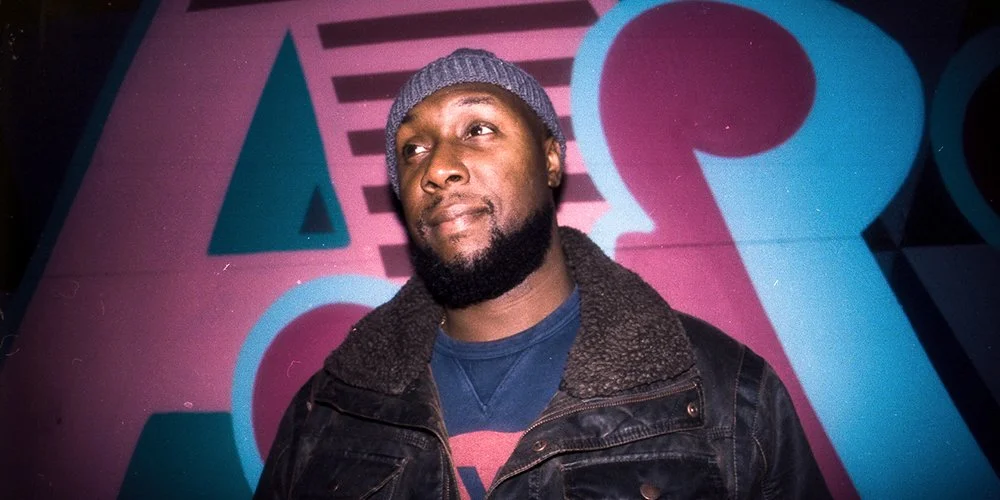
Looking back now at your time in one of the most legendary UK rap groups ever, how do the memories hold up?
We were really into the next approach. Top crew in the country, in the UK. From here to Scotland to everywhere, like we were getting played on Westwood, 1Xtra – we virtually lived up at 1Xtra due to the reputation we had – the energy, the hype, the mystique, the reliability, the connectivity that we had to everybody – we got described as being unique. We were doing what people like your Giggs and your Wretch 32s are only starting to do now; we had the neeky kids and we had the roads as well. We had them from both sides. I think there’s a bit of a love affair with the street element. That’s why grime has done so well because I think the ‘other side’ romanticises it a lot. Let’s be honest: they cannot relate to the experiences. All they have to connect them to the music is what they’re hearing. That’s my personal perspective on it. As Terra Firma, we were saying things that they could actually directly relate to. Yes, there are ‘neeky’ kids but let’s call them the ‘other side’. Some of them may have had richer parents, some of them may have gone into care and lived with their grandparents. We were talking about real struggles that everybody can relate to – not only black people from West Indian/ Afro-Caribbean heritage. We’re talking about struggles that everybody can relate to. I think at that time it was unique for us. It was our selling point, really. We could do the Keith Murray thing, do the sexy, multisyllabic rhymes that actually made sense but then we could talk the road stuff because we lived it to varying degrees.
Primarily, yeah, we were coming from the fact that we all grew up in working-class Afro-Caribbean environments, but they weren’t dissimilar to, say, John from Eltham who grew up with half Scottish and half Irish parents who’ve got various family issues. That wasn’t too different to what we were going through. A lot of times we were getting props from people like that, from Birmingham, Manchester, Scotland, Devon, Sheffield, literally every week up and down the country. It was crazy. It was the same after Terra Firma – even when I was touring with Jehst and performing with Foreign Beggars and stuff, it was the same. Just connecting through the music. It kind of shifted a bit then. That’s when it started to be the less working class and the more kind of like middle and upper-class kids who just wanted a good time.
So you kind of left the scene in ’06? When did you move away from the spotlight?
I probably left for about two years? After my first album – The Experience – in 2006, I had a two-year break and then came back with Shots of Smirnoff in 2009.
I read that you used to drink pints of vodka straight. Is that true?
I was young and inexperienced; I had that aura of invincibility; peer pressure; wanting to look cool. Just all the things you go through when you’re a young man of that age, innit, and you literally know nothing about repercussions and you have no foresight. You know what I mean? It was literally that. At the beginning, I was going through some personal shit as well man. Alcohol was my way out. I used to model myself on ODB. I used to drink and rap. When I was drunk I would freestyle for fucking hours. Same thing when I used to smoke weed – my head would just go to another galaxy. Rapping was my release mechanism for the PTSD. Rapping was that… it sounds really bad but sex as well.
You’ve said women are your only vice now?
Yeah, but I think I’ve conquered that, to be honest. As a man in his mid-30s, I can honestly say I’ve curbed my lust demon somewhat and, you know, my perspective and behaviour towards women. But yeah, rapping was my way out. Nowadays, because I don’t rap anymore, the music is obviously for me now. The therapeutic element is actually making music and being a father, to be honest. My son was born in 2014. Shortly after that, my mum died, which was again a very very testing time. It was bad, to say the least. Plus I was on anti-depressants – I was on sertraline and promethazine. I wasn’t coping well.
I assume you’d been keeping note of the American scene in some form. They’re basically obsessed with anti-depressants at the moment.
In the hip-hop scene, and this is my personal opinion, there’s no need for it. Look at Kurt Cobain, look at Anthony Kiedis from RHCP. Any rockstar will tell you when you’re injecting black tar heroin, Xanax doesn’t even come into the picture. They’re on a one-way ticket to soul destruction. Yes, I’m very aware of why people use them, and the fact is I was involved with them, but these kids, they don’t know. Like I said before, it’s that aura of invincibility. ‘I’m just gonna pop a Xanny!’ You know ‘Lil Xan?’ Why? Why would you do that? You know what you’re doing innit. It’s just for fame purposes. The whole Lil Peep situation should teach people, it should be a beacon like, ’OK, this aura of invincibility isn’t going to last long. It’s a facade. It’s nothing sustainable’. Because we had it! We had that aura and it fades away. You get older, and when you age, that’s the number one thing; age and time go against you. It’s not productive to us as a scene in any way. If you do drugs, that’s your prerogative. I’m not personally into, ‘I pop a Xanny… fentanyl!’ And all that. We’ve been through that: rave culture, pills, Es, tabs – we all done that. But not for hip-hop, man.
It’s absolute madness. Drugs are not the only way out. You can talk to people, you can seek therapy. Communication is the key. Talk to your parents. I was a youth worker for four years and I’ve seen some horrific shit. Half of these kids that I was mentoring or speaking to, they weren’t doing drugs, they weren’t popping barbiturates and amphetamines for fun. Nah, they were getting taken into care. They were getting sectioned. They were getting shipped up to flipping Scotland to live with foster parents. Or going to prison. It’s not a joke, man. Depression is not a joke. People going through shit, real issues, and it just cheapens their experiences. I feel very strongly about it because I’ve got a very coloured history with mental health in my family. One of my aunties, I’ve never met her – she’s been sectioned for my whole life. My parents as well, they’ve got mental health issues; trauma they’ve gone through as kids in care and all types of abuse. Again, they never popped pills for that. Half of them never even got therapy for it. It’s not about glorification. It’s like the romanticisation of road life. When you see what it really does and what real people are going through – people getting shot in the face, kidnapped, raped… Yeah, you want to hear tunes in the rave about shooting people but you know nothing about that. Do you know what it’s like while one of your brothers or cousins is tripping and it’s taking people to hold him down with a belt? People don’t know nothing about that. If you do, it’s those people who are saying you shouldn’t be doing that, shouldn’t be listening to people like Lil Xan because he can go back to his little flipping three-bedroom terrace in some nice little suburb – you know what I mean? That kind of attitude. I’m not for it at all.
You’ve referred to TRON, your latest album, as your chrysalis. Can you talk about TRON, particularly the choice to have so many instrumental tracks and why you chose to spit on those select songs?
TRON started out as a fun idea in my bedroom at three o’clock in the morning. When I started in 2014, I was going through a very bad time. Mum died, my son was newborn, I was on the rough side with his mom. I was in a dark place. Making music was escapism – much to the detriment of the relationship with my son. But I started making music and I thought, ‘OK, the best music comes through turmoil and trauma.’ I was just interested in making beats; I’d just put out Hibernation at that time. That was when I addressed all the Klash stuff. I was just looking for direction. I never planned to do another album – I’d planned to just raise my son, grieve for my mum and take it from there.
Originally it was going to be a four-track EP to experiment with the electronic, hip-hop side. Then it went to seven, then it went to 14. I chopped off one and left it as 13. I thought, ‘Let me tell a story through my music, man’. Nothing more, nothing less. It was a big step for me. I just want to be open-minded and explore where I can take it musically and ideologically. The ideology of an album. I’ve always been scared and that’s the thing about UK hip-hop, there’s no room for expansion. If you notice, let’s be honest, UK hip-hop all sounds the same. You can’t differentiate one guy from another. It’s a bit like how grime was at one stage, I think UK hip-hop’s gone to that place. That’s my personal opinion, though I still want to be part of it.
Your track “Da Master” – does that refer to the industry and labels? It goes straight into “Unstoppable”, which is basically a ‘fuck you’ to the industry, right?
Yeah! That’s what I’m saying. I’m very conscious to not make it sound too convoluted, contrived or forced. It can really easily come across that way when you’re trying to go too deep. But when I’m telling you how I made that album and the concept behind it and why I put things where I did, it’s very very simple. I think it’s absolutely fantastic that people are reading into it and drawing their own interpretations from it because that’s what I want. I’ve put it out there, what you lot get from it is whatever you want. Probably one of the main inspirations for making TRON was to – not mimic, but to rival Lupe Fiasco’s The Cool, in terms of meaning and content.
That’s an amazing album; I shed a few tears because of that one, for sure.
It’s one of my top-five albums of the last decade, I don’t think there’s anything like it. The Cool came out in 2007. I don’t think it was as cohesive as mine – big statement, but I’m talking continuous though. He had breaks like the one with Snoop – but the story behind The Cool is ill!
Let’s finish up on what you stand for. Can you break that down for people who maybe haven’t heard from you in a while, or are hearing about you for the first time?
I stand for being a good human. I stand for all things righteous and nothing negative. But at the same time, be aware of your flaws and shortcomings and acknowledge them. Be the best person you can be. Make the best music you can – whatever passion you have. Don’t let anybody try and dampen that passion or tell you to be less of you. Think and look closely. I want people to think more about what they’re doing, what they’re saying, where they are. Be more aware. One of the main things about TRON, you said it, everyone’s just got their blinkers on. Take the blinkers off. Don’t be afraid. Don’t be afraid of what your mum, dad, girlfriend, boyfriend might say. Just be you. It’s not too late. More power to you. Download my music illegally – do what you want. Most of all: enjoy it.
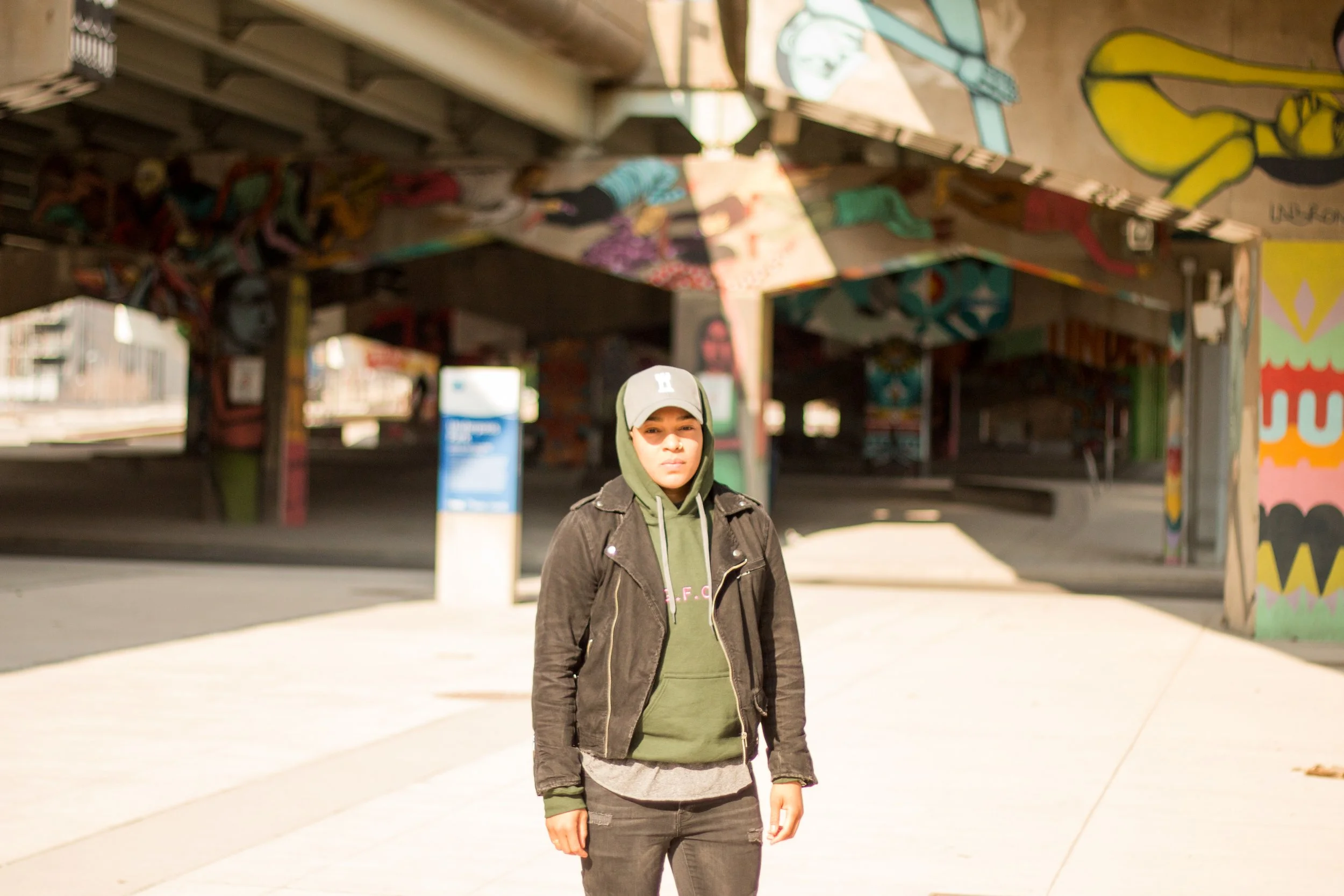
Rookz Does Not Quit
It all begins with an idea.
An entrepreneur, A&R, public speaker, musician and, in her own words, "a problem solver," Kianna 'Rookz' Eastmond's story up until now is as emotionally demanding as it is humbly inspiring.
Kianna grew up in a traditional conservative Jamaican family in Scarborough, Canada - a 30-minute drive from downtown Toronto. Rookz would spend her summers working with her sister at her mom's hair salon. Her mother's attention to detail and searing focus led to her acquiring other businesses as well as property. Aged 14 she came out as queer, which led to her being kicked out of her family home in order to "scare her." Rookz decided not to go back, which meant dropping out of high school too.
The next five years were spent in the underground making ends meet. Her path altered when, in 2009, she got a job working security at The Blinds Inn, a well-known spot for its open mic events at the time. It's here that she heard her first sounds of the music industry, meeting the likes of Kim Davis, Leila Dey & Tory Lanez.
Perhaps more importantly it was here that Kianna linked up with KR Moore, an engineer who'd just graduated from the respected Trebas Institute and owned a small, "pop-down random place in a basement," studio.
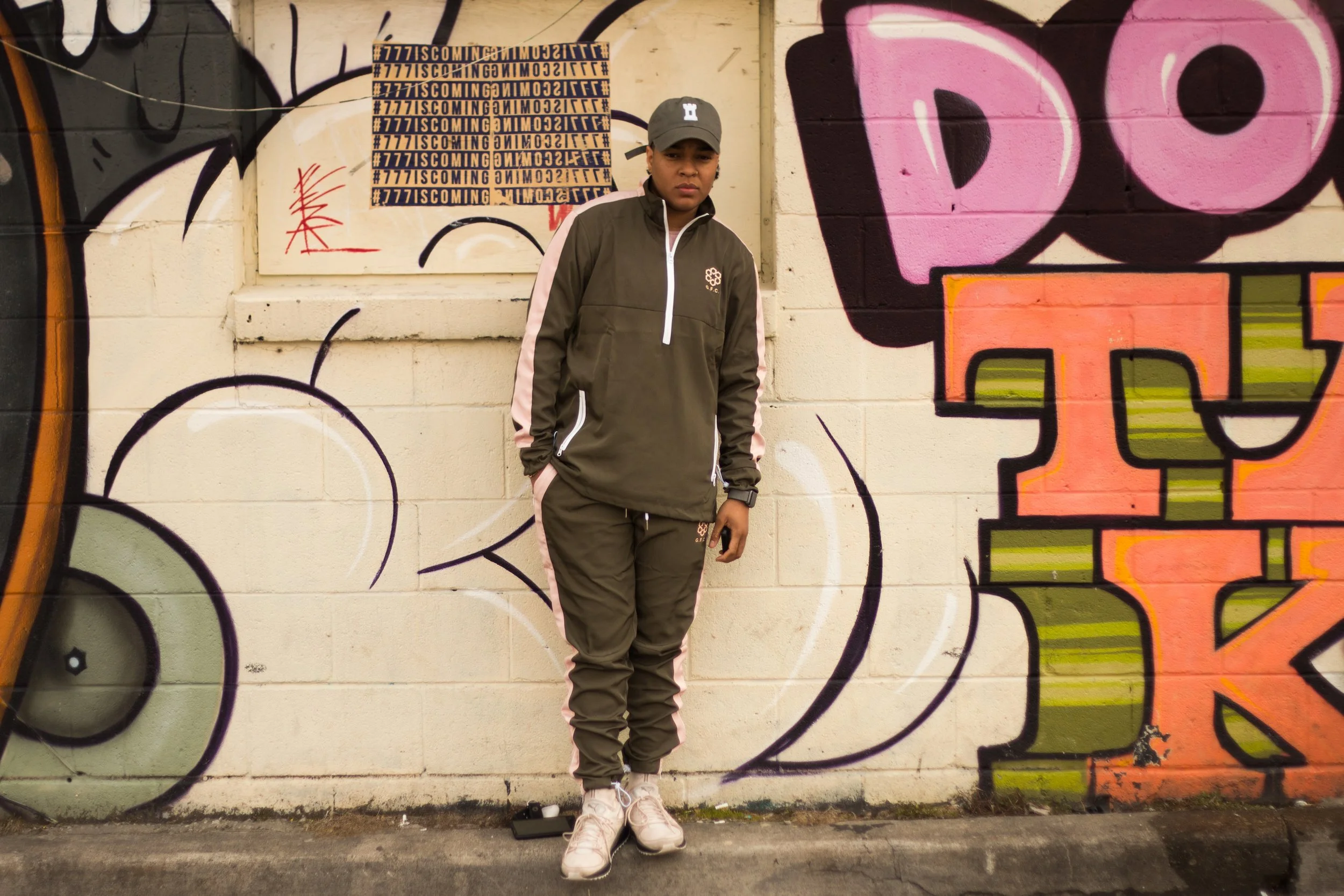
The two clicked and he'd regularly invite Rookz to pass through. Wanting to repay the favour to KR, Kianna began to source artists to work at KR's studio. Leila Dey, known as PG at this point, was crushing the open mics - she won ten competitions in a row. So, it made sense when Rookz inquired about becoming her manager.
It turns out that Leila's situation was already patterned; she suggested Kiana approach fellow Torontonian Shi Wisdom with the offer of management. Shi accepted.
By Spring 2012 Shi Wisdom & Rookz had four records being spun on four different radio stations in Toronto with no label; Shi had a writing credit on 'R.I.P' with Rita Ora; Drake showed up to her release party. Everything was going great, "I really was picking out my Lamborghini," she laughs to me.
Wanting to capitalise on the good fortune, Kiana quit her high-paying job and used all the money she had to open Sandbox Studios with KR Moore in 2012 (originally called The Lab).
The idea was to record Shi's album, and also bring in local talent to record in the space and help develop them as artists. This wasn’t to Shi's liking and, soon after, their business relationship terminated in a rather unsavoury, public fashion.
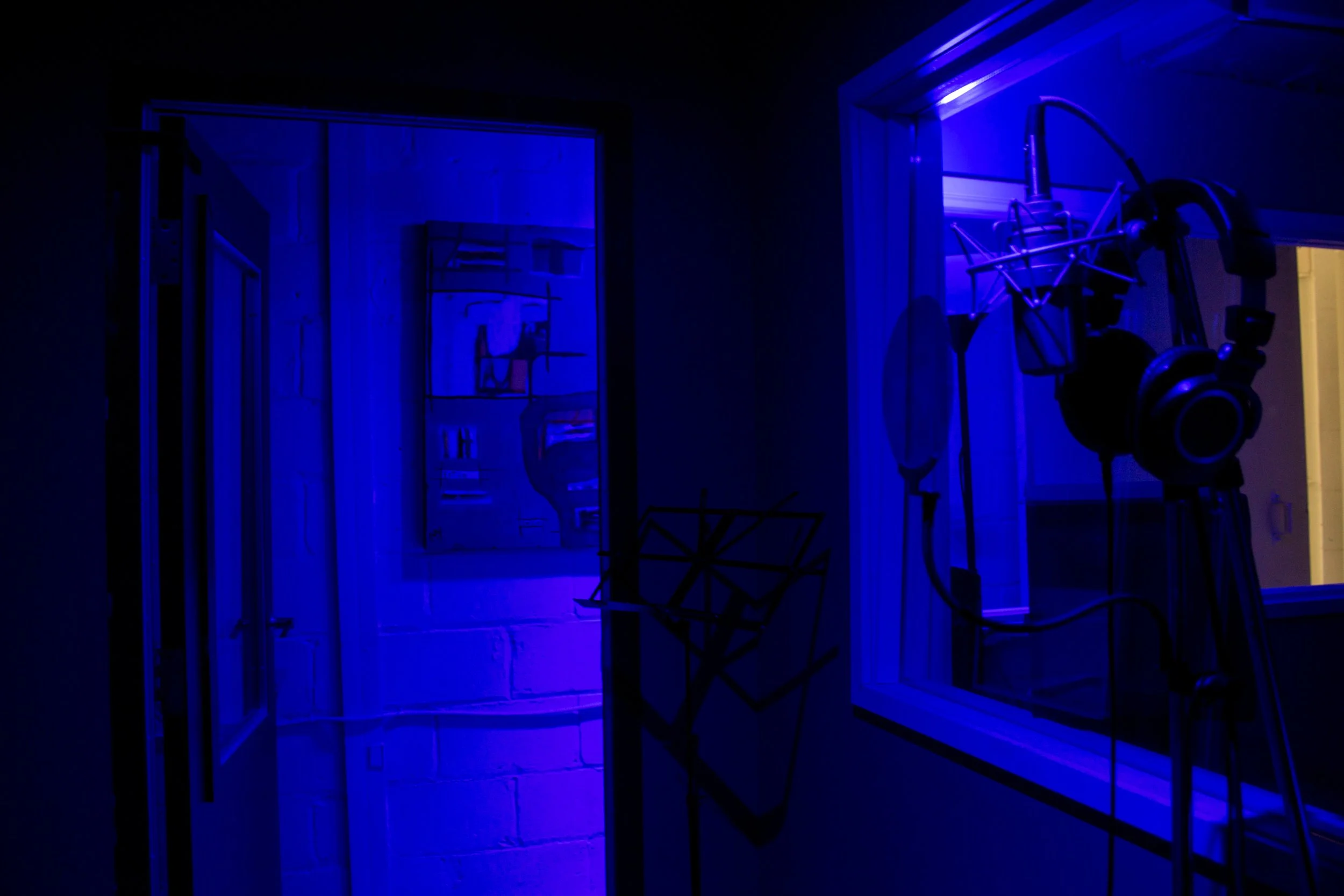
Since then KR and Rookz have built Sandbox into one of the most well-known recording studios in Toronto. Sandbox has the strange dual reputation as being both a place where unpolished creatives take their first steps, as well as being a go-to spot to record in the city for the likes of Cardi B, Tory Lanez, Jadakiss, Little Simz, Ty Dolla $ign, Kid Ink, Tiffany Gouche & Iman Omari.
Now a regular presence on panel discussions, an owner of multiple companies and a burgeoning player in the self-motivation game, Rookz smiles with self-assured confidence and pride when we meet at Sandbox Studios.
We sit down - occasionally interrupted by her moulting jack russell Jada - to discuss the success of Sandbox, the common mistakes artists make and the state of Toronto's music industry.
———
I know one of your rules is to not wear sneakers worth more than $100 in the studio. What is it that makes Sandbox stand out?
I don't run Sandbox to make money. I run Sandbox to fulfil a purpose and a gap. If you come to Sandbox and you're like "I have two-grand, I want to do a full mixtape." And I see you don't have a website, and I see you have 10 Instagram followers, imma tell you no I don't want your two grand. Maybe take $1000 of it and build a brand, take $1000 of it and record... that's why I started a graphic design company as well, to integrate that in.
For celebrities, I think what makes it attractive is [they] know that I'm not a star struck kind of person. I treat everybody the same, which means that I don't care when Cardi B came and she said she didn't want anyone in the studio. I was cool to sit outside. I got to talk to Patientce, her manager, and as a result I built a stronger relationship with her team by remaining humble. The industry kind of knows that I deal with people proper. I think that's why I always get referrals from that end. And we deliver.
All these [famous] names had been to Sandbox. People kept coming up to me like "I can't wait until I'm good enough to come to Sandbox!" I thought that was so wild. Maybe by the 20th person who said it to me, I replied "why do you think you have to be good enough?" And they were like "Yo, because of all the celebrities who come through, I don't want to be trash..." I realised I was doing it all wrong. I was like, man, I'm putting out this perception that Sandbox is a place that you go to when you're already there. The skills and the development, what I've always felt like our strengths are, is that Sandbox is the place you go to when you haven't figured it out.
At Sandbox, we all wear Sandbox stuff. That's why we have the shoe rule. I just want my team to feel equal. Their value is so important to me. If they're not making people feel good, if they're not making people feel happy, then it trickles down. I always make sure I support them - somebody's running late so I'll cover the session. Last night North [Recording Engineer] was here until 1am while I was mopping, vacuuming, cleaning. They don't have to do chores. They watch me clean toilets! I think that helps us all realise that we're in this together. It's not like I'll go the club tonight and you can clean the toilet. For me, I believe so much in what they do and their value, I just want them to shine in what they do.
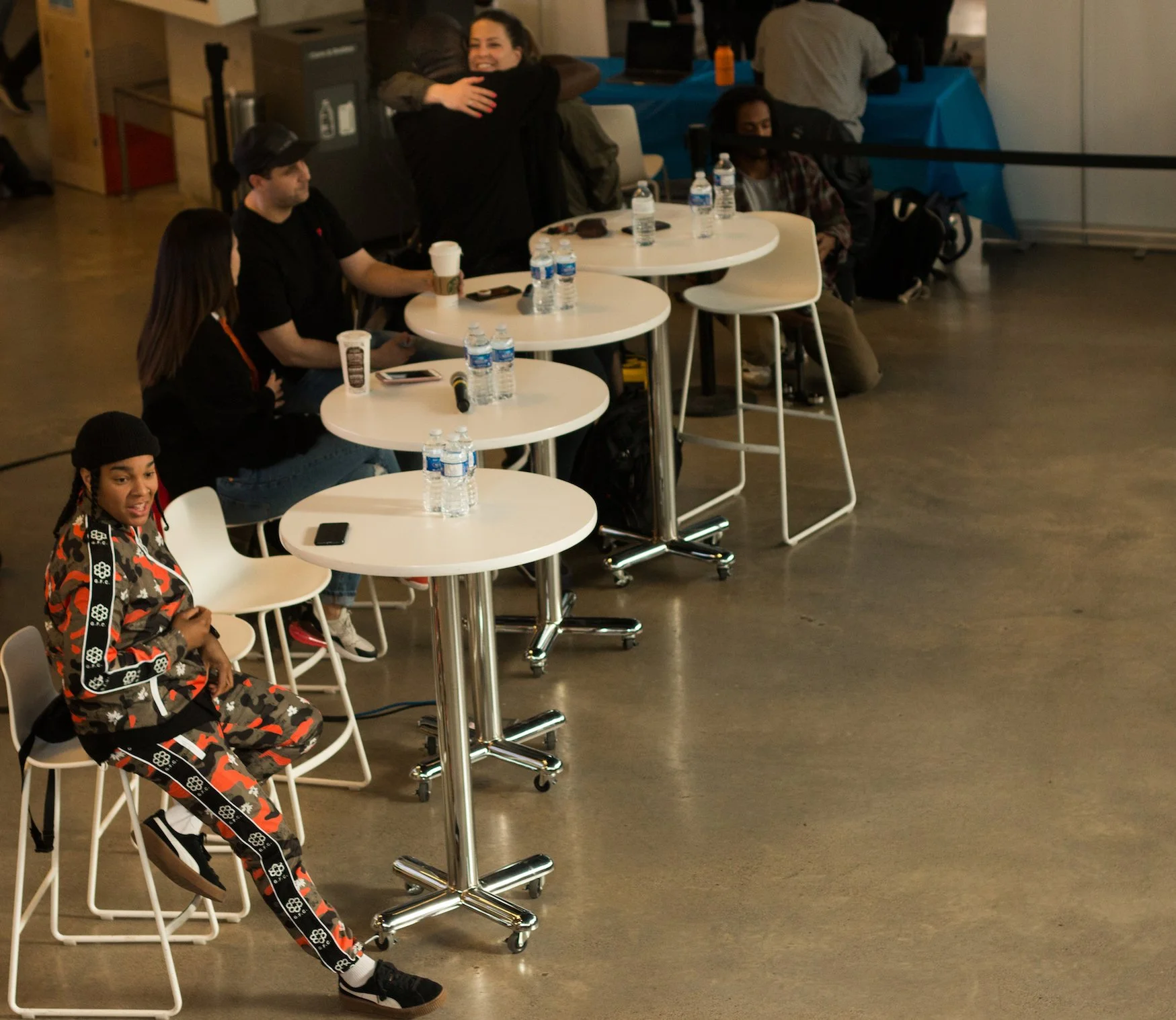
I know the value of all the pieces that come together in order to make things sustainable for an artist. When I realised that was happening, that's when I fell back on posting the celebrities, posting me as being this really successful or inaccessible person, who you can only talk to if you have money etc. That switched it up entirely for me. Now like, this is the playground. This is where you should come if you've never recorded before. Maybe you've been ripped off and couldn't get your files... this is the spot you come to when you want to be respected. I treat everybody like they're Cardi B. Everybody.
Treat people well on the way up, and they'll be more likely to look out for you. Same with the money: if they spend $1000 on their brand and the recording, they're more likely to blow.
That's legacy, right? I always tell people, especially my team, sometimes we don't charge people or we'll charge less. I don't mind taking an L, financially. I always tell people: we're taking the L, and the L's called Legacy.
When I get platforms like this it's important for me because I want the kids in London to know that, when they pull up to Toronto, Sandbox is there. It's only $25 per hour to rent the studio. People call it cheap, I don't call it cheap. I call it accessible.
You're currently renovating the space. What's the purpose behind that?
When we think about people like Ty Dolla $ign who can play a ton of instruments, or HER, or Charlotte Day Wilson: they can be anywhere because they understand music inside out. But I think there's an aesthetic that helps build confidence. So, when you walk in you're like "Yo, I'm not there yet..." I want you to walk in and think "I'm on my way there." I never want it to look like a million-dollar studio, but I also don't want it to look like you're in your friend's basement. I want you to feel good knowing you're in the same booth Tory Lanez or Ty Dolla Sign was in. So, what you have to do is have the same work ethic. [The renovations aren't] even done and Tory Lanez was here. He saw me and was like "Sis, I'm so proud of you." Just knowing where we all came from. I want it to be a space that's very in the middle.
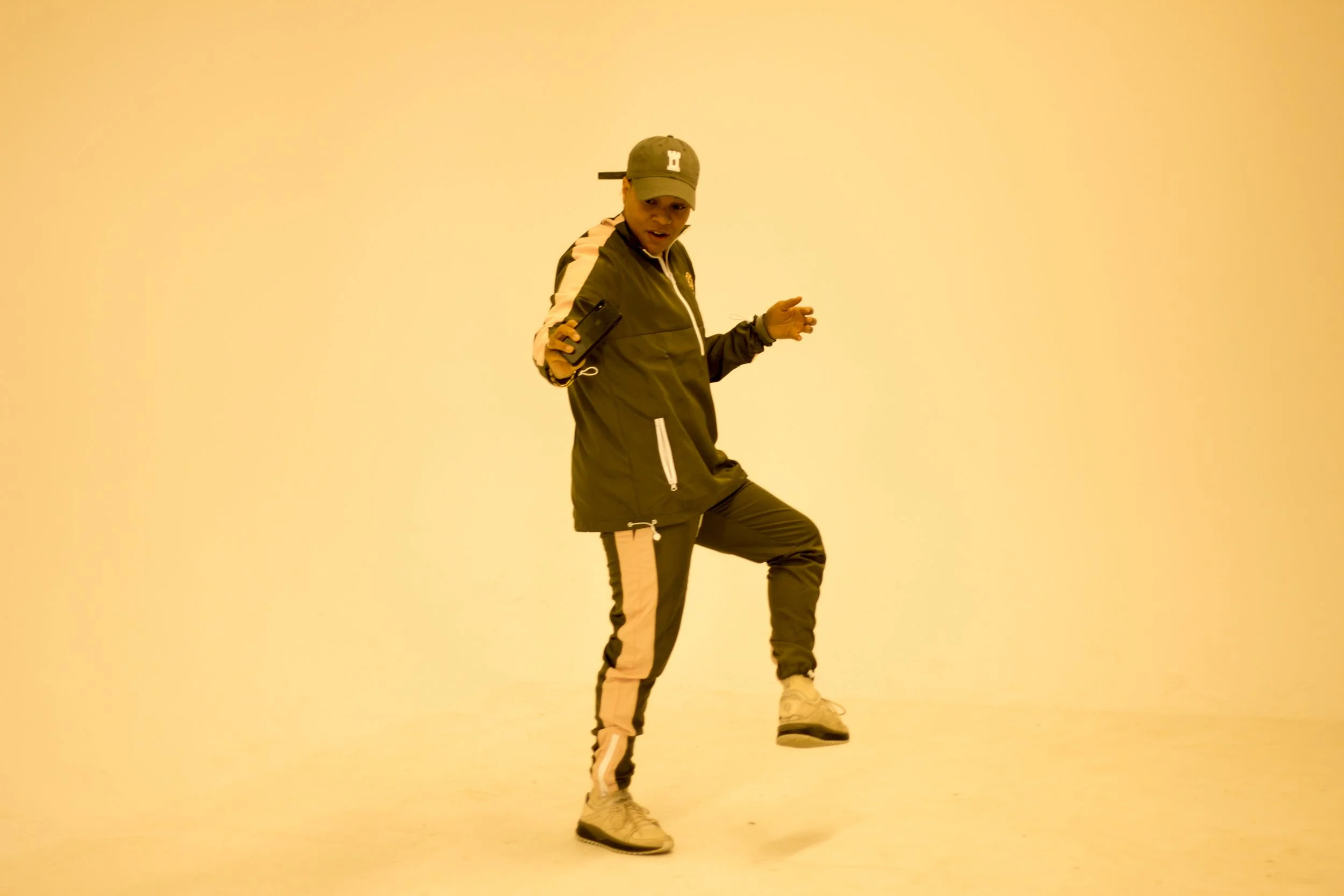
I want to be a ten, in being an 8/10. I want to be the best 8/10. Also, I realised, from being in LA that really nice, huge studios can also be very intimidating. I've seen people who are lit at making music, great singers, go into a $1,000,000 studio and just croak. Because there's such a high expectation to deliver. I really never want people to feel like that when they're at Sandbox. I just want them to feel comfortable.
All those things to me, when I chose this spot, was about the customer experience from beginning to end. I want people to be proud when they come here. Proud to collaborate, proud to let people know they work out of Sandbox. But never feel intimidated or like they're fronting. "Yo I'm inside Revolution!" Why are you there? You have 200 followers. Save your money.
I think it's fair to say you've had a lot of people talk shit about you over the years. You've always been the type to deal with mudslinging on the low, rather than airing receipts on the timeline. How do you build up your defences against the neigh-sayers?
I think because I came out as gay in high school. It was so hard. It's not like it is now. I came out as gay when nobody was gay... nobody was gay in media, especially not black and gay. There was no representation... for being gay, there was a lot of people that thought of a flamboyant guy. There wasn't really like imagery for a black female who performs gender in a particular way. Because I came out so early, I feel like I had learnt how to deal with people's ignorance and people's disrespect, really really early on. I developed the attitude that if you don't know me - I don't care.
[Years ago] I wouldn't have done an interview. I'd say "it's not about me, interview this person instead." But now I realise that it's so important to hear me speak about it on the business end. Because I know so many people who are just chucking away wondering if what they're doing is making any impact. I'm grateful to know that I am making impact.

You work in A&R and talent development. What mistakes do artists often make?
The number one thing in my consultation is: stop thinking outside of yourself. Ask why you want to do music. "I want to shift culture..." Are you Jesus?! Why do you think you can shift culture? Whether Jesus is real or not, I'm pretty sure every day he got up and walked. Years later you're a part of culture. In the moment, you're supposed to just be doing something over and over again. Artists are so obsessed with the end of [the process].
They're always trying to like "I'm only going to post three pictures with no face because that's what HER did." Yeah but HER's manager is Jeff, who's also Alicia Keys' manager. He has so much pull that it doesn't matter, HER was already signed to RCA. You have to understand the business behind it. You can't do what somebody else does. You have to do what genuinely works for you. Artists are so obsessed with things that are beyond their control. What's in your control is be consistent with how much music you put out, how often you write. I really don't like when people are like "I want to make great music." You never decide what great music is.
What people have to understand is that when you create songs, they are for people to experience in a moment. That's how they connect to it. You don't decide what is great music, or what is bad music. There's a song that you hate that someone else will cry listening to. You've just got to make music and put it out. I think that artists get in their own way. Do what's authentic to you because a lot of the pattern following is where people fail. One of the things I've learnt over the past five-years to be honest is that music has changed so much. It's not the music industry anymore it's the media industry.
Your brand is more important than your music, at any point in time. What I think people need to understand is your influence, and really tapping into your niche demographic. Who messes with you?
Tell the people a bit more about your current movements, what are you working on?
A lot of people have been asking me to help them build businesses recently. So, I'm launching a mentorship program and a YouTube series. I'll be putting videos out every Monday/ Wednesday/ Friday, as well as starting a mentorship programme called Locker Room. All my other businesses and companies are growing. I'm a partner at GrantGenie.ca. UNSGND is growing; Sandbox is growing. I'm really excited about the stuff Rookz is doing. Everything else is business. What really matters to me is being able to impact other people and help people heal.